
Salt air is an exposure factor
FHWA guidance confirms that salt-laden air generated along the Atlantic coast may be transported inland. Its effect varies by place instead of stopping at one universal line.
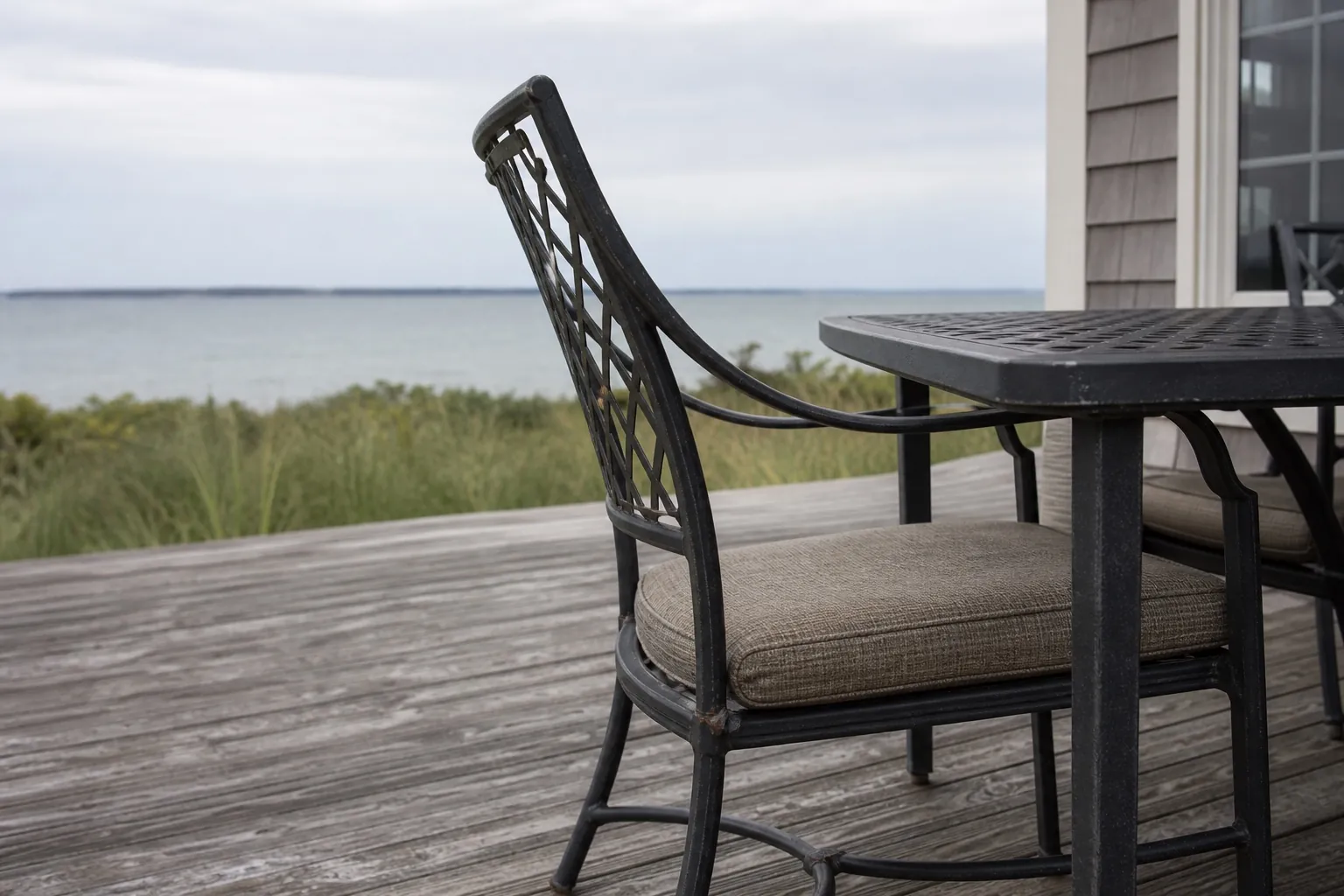
Home / Jersey Shore / Salt air corrosion guide
Jersey Shore field guide · Updated August 17, 2026
Salt-laden coastal air can move inland, and moisture can help corrosion develop on susceptible metal. But distance from the ocean is not a diagnosis. Wind, shelter, wetness, material and the condition of the coating all change what happens to a particular set.
Built from Patio Powder Coating research plus primary technical guidance from FHWA and NIST. No invented coastal percentages or universal distance rule.
The direct answer
The useful question is not simply “How many feet from the beach?” It is whether chloride deposits, moisture, coating breaks and the specific metal are creating visible change on your furniture.
FHWA guidance confirms that salt-laden air generated along the Atlantic coast may be transported inland. Its effect varies by place instead of stopping at one universal line.
NIST research describes coastal corrosion as a system involving moisture, salinity, temperature, humidity and exposure. The same address can contain both exposed and sheltered conditions.
Rust, pitting, bubbling or residue tells you what to photograph and investigate. It does not prove what the metal is, whether damage is hidden or whether the frame is structurally safe.
The exposure equation
FHWA says coastal chloride effects depend on prevailing wind, distance from shore, topography and environmental characteristics. NIST adds humidity, wetness and exposure condition to the picture.
This is a homeowner inspection model, not a laboratory calculation. It helps replace the false certainty of “oceanfront equals ruined” or “inland equals safe” with a better set of observations.
Salt-laden air can be transported inland by prevailing winds.
Distance matters, but it does not act alone or create a universal cutoff.
Open exposure, overhangs and protected corners can collect and dry differently.
Humidity, condensation and how long surfaces stay wet influence the environment.
Chips, peeling and worn edges change what is visibly exposed beneath the finish.
A five-minute field check
Use one slow pass around the complete set. You are documenting visible condition, not deciding structural safety from the deck.
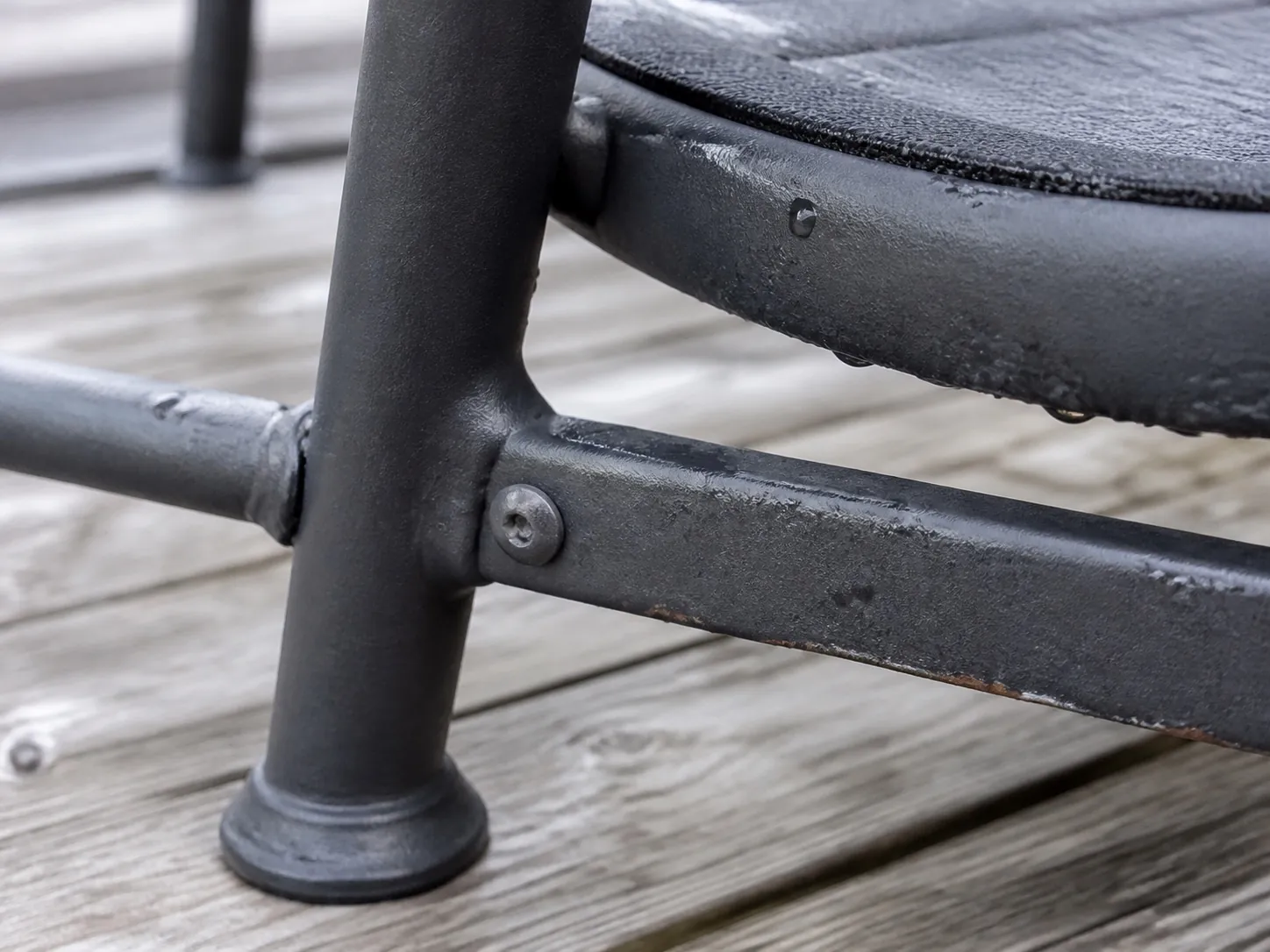 1234
1234Capture bubbling, staining, cracks, bends and coating changes around connections.
Look along rails and ledges where water or deposits may remain visible.
Photograph contact points and the lowest areas in context and close up.
Include the surfaces that are easy to miss from normal standing height.
Visible signals
Different metals and coatings show wear differently. These observations help route the next question without turning a website into a materials lab.
The protective finish has visibly changed or separated in that area. Photograph the edge of the affected coating and the surrounding intact surface.
Does not prove the depth, cause or final restoration scope.This is relevant on iron- or steel-containing furniture and belongs in a rust-condition review. Show the whole piece plus the worst area.
Does not confirm structural safety or whether every affected area is visible.Visible depressions, flaking or missing material warrant closer attention, especially near joints, feet and load-bearing geometry.
Cannot be measured reliably from an ordinary photo.Document it, but do not name the chemistry from appearance alone. Include material clues and whether the residue returns after ordinary cleaning.
Not automatic proof of salt, aluminum oxidation or coating failure.Stop treating the issue as cosmetic. Record where it appears and avoid relying on a photo-only decision about safe use.
Requires a more cautious physical-condition boundary.Build a useful condition record
Take the same set of views when you first notice a change and again when you need to compare it. Consistent framing makes progression easier to discuss; it still does not substitute for structural inspection.
The complete setEvery chair, table and separate piece included in the project.
The worst visible areaOne context view and one close view, both in focus.
Joints, feet and undersidesThe less-visible places where condition questions often remain.
Material and construction cluesCast details, tube shapes, fasteners, labels or exposed metal if already visible.
Location and accessYour ZIP, stairs, gates, quantity and any seasonal access constraint.
Route by the real question
This guide explains exposure and inspection. It does not absorb the material, method, price or regional-service argument from the rest of the site.
Use the condition-first restoration page when the immediate question is what to do with a rusted set.
Use the regional page when your main question is service for a Shore property.
Use the material page for iron construction, visible rust patterns and restoration scope.
Use the aluminum page for oxidation, coating wear and cast-metal refinishing questions.
Use the comparison page when the unresolved question is the finish method.
Primary sources
FHWA guidance states that Atlantic coastal salt-laden air may move inland and that chloride effects vary with prevailing winds, shoreline distance, topography and environmental characteristics.
Read FHWA guidanceNIST’s Statue of Liberty account documents how moisture and salt from ocean air interacted with metals after the original separating layer deteriorated.
Read the NIST caseThe study describes atmospheric steel corrosion as influenced by temperature, humidity, chloride, rainfall, wind, exposure condition, orientation and rain cleaning. We use that system-level principle, not its bridge lifespan projections, for this homeowner guide.
Read the NIST publicationSalt-air corrosion FAQ
Salt-laden coastal air can contribute chloride deposits while moisture supports corrosion on susceptible metals. The effect on a particular furniture set varies with material, coating condition, wetness, wind, shelter and local exposure.
There is no responsible universal distance for a patio set. FHWA guidance notes that coastal chloride effects vary with prevailing winds, distance from shore, topography and local environmental conditions.
Visible clues can include coating chips, bubbling, peeling, orange-brown rust, staining, pitting or wear around joints and feet. A visible clue identifies what to inspect; it does not establish hidden condition or structural safety.
No. Residue in a photo does not identify its chemistry or prove a diagnosis. Photograph the residue in context, along with the complete set, coating condition, joints, feet and undersides.
No. Photos can begin a human review of visible condition, but they cannot confirm structural safety, hidden corrosion, remaining metal thickness, project acceptance or a final quote.
Aluminum does not form iron rust, but it can show oxidation, pitting or coating failure. Cast aluminum questions belong to the material-specific refinishing page so aluminum is not treated like iron or steel.
The right path depends on material, construction, existing coating, visible condition and the intended result. Use the powder coating versus painting comparison for the method decision rather than assuming one answer from location alone.
Patio Powder Coating is based in Sayreville and reviews accepted projects across New Jersey, including the Jersey Shore. Pickup and return delivery depend on project location, quantity, access, route and confirmed scope.
Free human photo review
Send the complete collection, the worst visible area, joints, feet, undersides, your ZIP and access details. A person reviews what is visible and identifies the next questions.
Send Condition Photos