
The job is local, accessible and low-stakes.
You are refreshing a limited area, the existing coating is stable, field application matters, or the item cannot reasonably go through an oven-cure process.
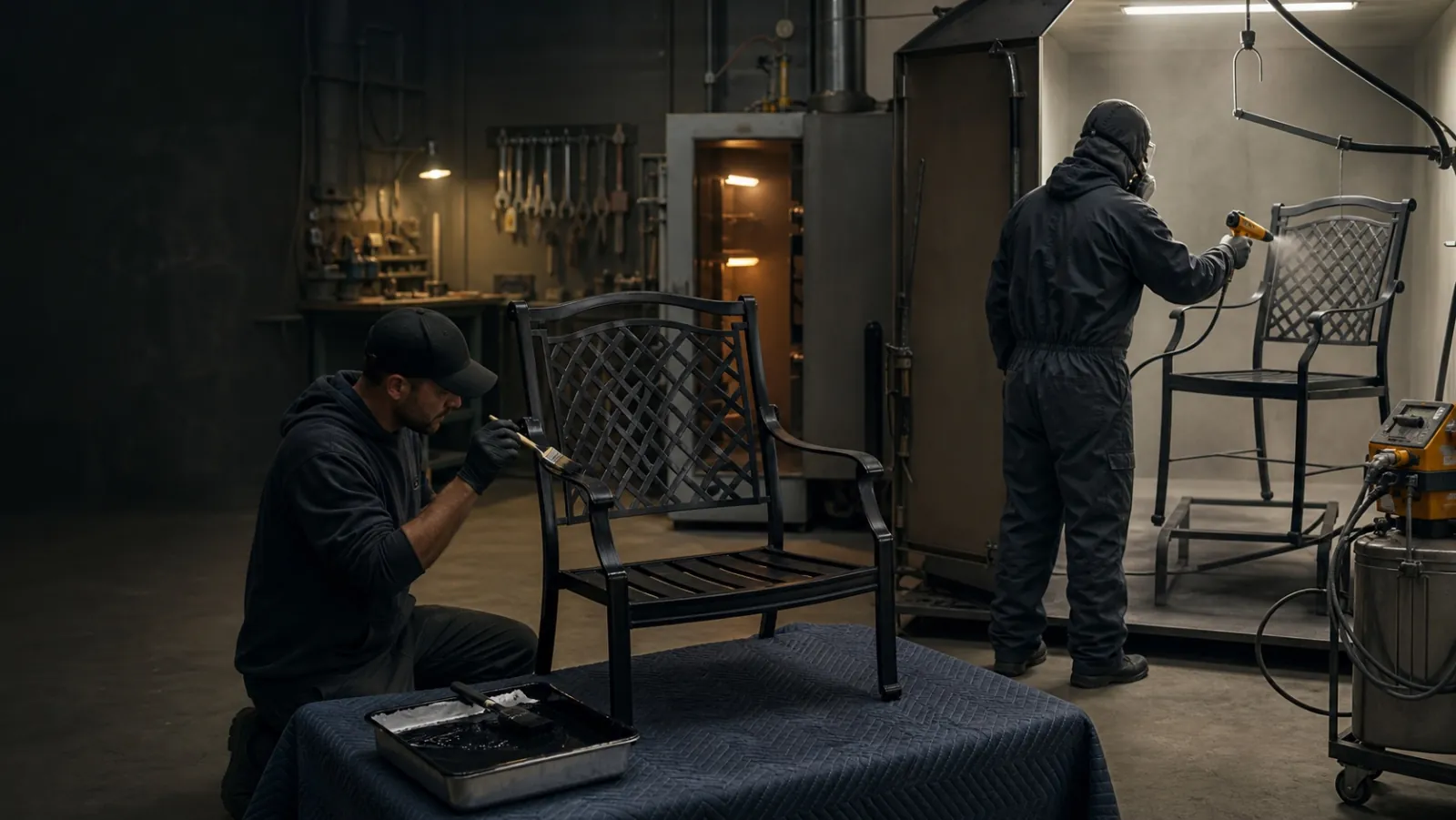
Finish comparison for metal patio furniture
Painting can be practical for a limited refresh. Powder coating often makes more sense when a suitable metal set needs a complete professional refinishing project.
Not sure which path fits? Send the full set, worst finish failure and your New Jersey ZIP.
The short answer
For a sound surface and a small cosmetic job, painting can be the simpler choice. For a suitable metal dining set with widespread coating failure, powder coating is often the more complete professional path.
You are refreshing a limited area, the existing coating is stable, field application matters, or the item cannot reasonably go through an oven-cure process.
Multiple pieces need coordinated treatment, old coating is failing broadly, corrosion and preparation matter, and the furniture is suitable for professional handling and cure.
Comparison at a glance
We provide powder coating services, so this table is intentionally explicit about where painting remains useful.
| Decision factor | Powder coating | Liquid paint or repaint |
|---|---|---|
| How coating is applied | Dry powder is commonly electrostatically applied to a grounded suitable part. | A liquid coating is brushed or sprayed according to the product and project. |
| How it becomes a film | The coated part uses heat to melt, flow and cure the powder into a continuous film. | The liquid system dries or cures through its specified mechanism; some can cure at room temperature. |
| Typical project fit | Complete professional refinishing of suitable removable metal furniture. | Cosmetic refreshes, field work, touch-ups and projects where heat cure is not practical. |
| Preparation | Existing coating, corrosion, contamination and substrate still have to be addressed. | The same underlying issues still matter; paint is not a substitute for a stable, prepared surface. |
| Complex furniture | Geometry, recesses, grounding, masking, hanging and cure suitability become part of the shop process. | Brush or spray access, runs, overspray and consistent coverage become part of application. |
| Touch-up later | Localized field touch-up normally uses a compatible repair approach, not a portable oven process. | Small areas can be easier to refresh in place when a compatible product and preparation are available. |
| Immediate cost | Professional scope includes handling, preparation, application and cure; pricing is project-specific. | DIY paint usually has lower immediate cash cost but includes owner labor and maintenance decisions. |
| Best question to ask | Is the complete set suitable and worth a professional refinishing project? | Is this truly a limited surface refresh, or is the old coating already failing as a system? |
Technical framing is based on the Powder Coating Institute and coating-manufacturer guidance. Performance depends on the specific coating system, preparation, substrate, design, cure and exposure; this page does not promise rust-proofing, weather-proofing or a fixed lifespan.
What both options have in common
Powder and paint are different technologies, but neither makes loose coating, contamination, corrosion or structural damage irrelevant. Preparation is part of the finish decision.
The actual metal and construction affect compatibility, handling and whether heat cure is appropriate.
Peeling, rust, chalking, old layers and contamination shape the work before new color appears.
The selected coating system depends on a surface prepared for that system and project.
Furniture design, outdoor exposure, components and future maintenance affect the practical choice.
It does not prescribe a blasting medium, chemical, primer, powder chemistry, liquid paint, cure schedule or structural repair for your furniture. Those details require an accepted project scope.
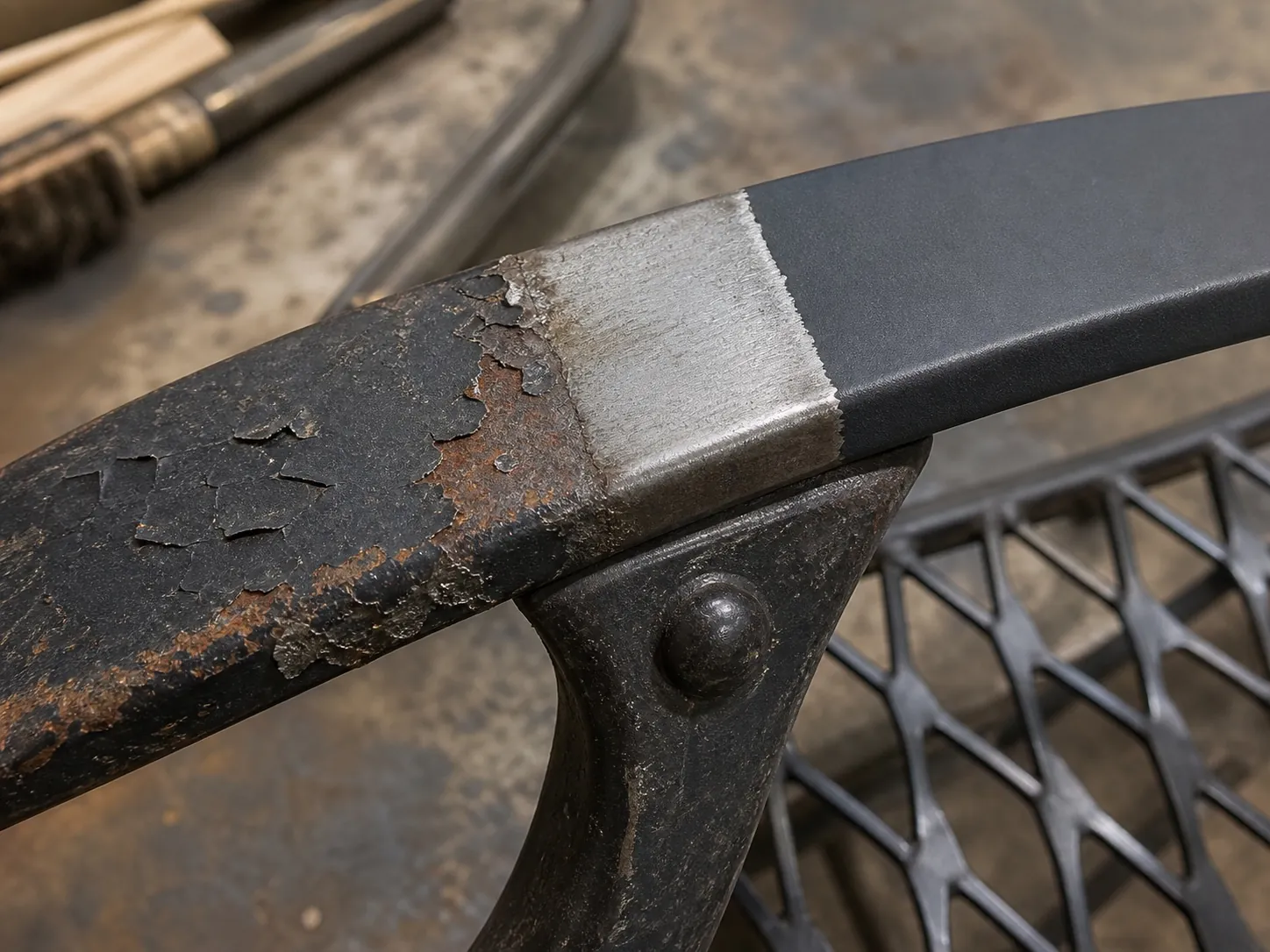
Do not compare topcoats in a vacuum
If paint is stable and the job is small, a repaint may remain a sensible choice. If layers are lifting across the set, the decision has moved beyond choosing a can of color.
Choose by scenario
The answer changes with scope. Use the situation closest to yours, then confirm the real furniture before committing.
See full restoration scopeA compatible touch-up or repaint may be more proportionate than refinishing the entire set.
A complete professional review makes more sense than treating each failed area as an isolated spot.
Liquid coating has practical field-application advantages; powder coating normally requires shop handling and heat cure.
That is not merely a paint-versus-powder question. Structural condition and current capabilities must be reviewed first.
Show every included piece, components, current finish and desired look so the full project can be evaluated together.
Cost and effort
A DIY repaint normally wins on immediate cash outlay. A professional refinishing estimate answers a wider question about the entire set, existing finish, required work and logistics.
DIY cost comparisons should include preparation, application time and future maintenance.
Stable paint and widespread failure create different project scopes.
The furniture and components must suit the selected application and cure path.
One chair and a coordinated dining set should not be compared as the same job.
Corrosion, geometry, damage and components may change acceptance and cost.
Pickup and delivery availability, scheduling and cost depend on NJ location and project details.
Direct answers
Powder coating is often the stronger professional path for a suitable complete metal set that needs broad refinishing. Painting can make sense for a small cosmetic refresh, field repair or project that cannot be oven cured. The right choice depends on substrate, condition, preparation, components and goals.
Powder coating typically applies charged dry powder to a grounded part and uses heat to form the finished film. Liquid paint carries pigment and binder in a liquid system and may air dry or cure in other ways depending on formulation.
An existing powder-coated surface may sometimes be repainted, but peeling, corrosion, contamination and adhesion problems cannot be solved by color alone. The old finish and substrate must be evaluated and prepared for the chosen system.
It can be reasonable for a limited cosmetic refresh when the old coating is stable and you accept the preparation, application and future maintenance. It is not equivalent to a full professional refinishing project when coating failure is widespread.
No. We do not describe any finish as rust-proof or weather-proof. Coating selection, preparation, furniture design, damage, use and exposure all influence performance.
A limited DIY repaint usually has a lower immediate cash cost. A professional powder coating project involves more complete handling and equipment. Project-specific cost depends on material, condition, piece count, geometry, required work and logistics.
Photos help a person review visible material clues, coating failure and scope. They do not diagnose structural safety, guarantee acceptance or create an automatic final quote.
Free project estimate
Send the full collection and the worst coating failure. A person reviews the visible material, condition, quantity, components and New Jersey location, then follows up where the decision needs more information.
Get a Free EstimateThe whole setShow every chair, table and coordinated piece in the project.
The finish problemInclude peeling, rust, old layers, joints, feet and any damage.
Your decision goalTell us whether this is a touch-up question or a complete refinishing project.